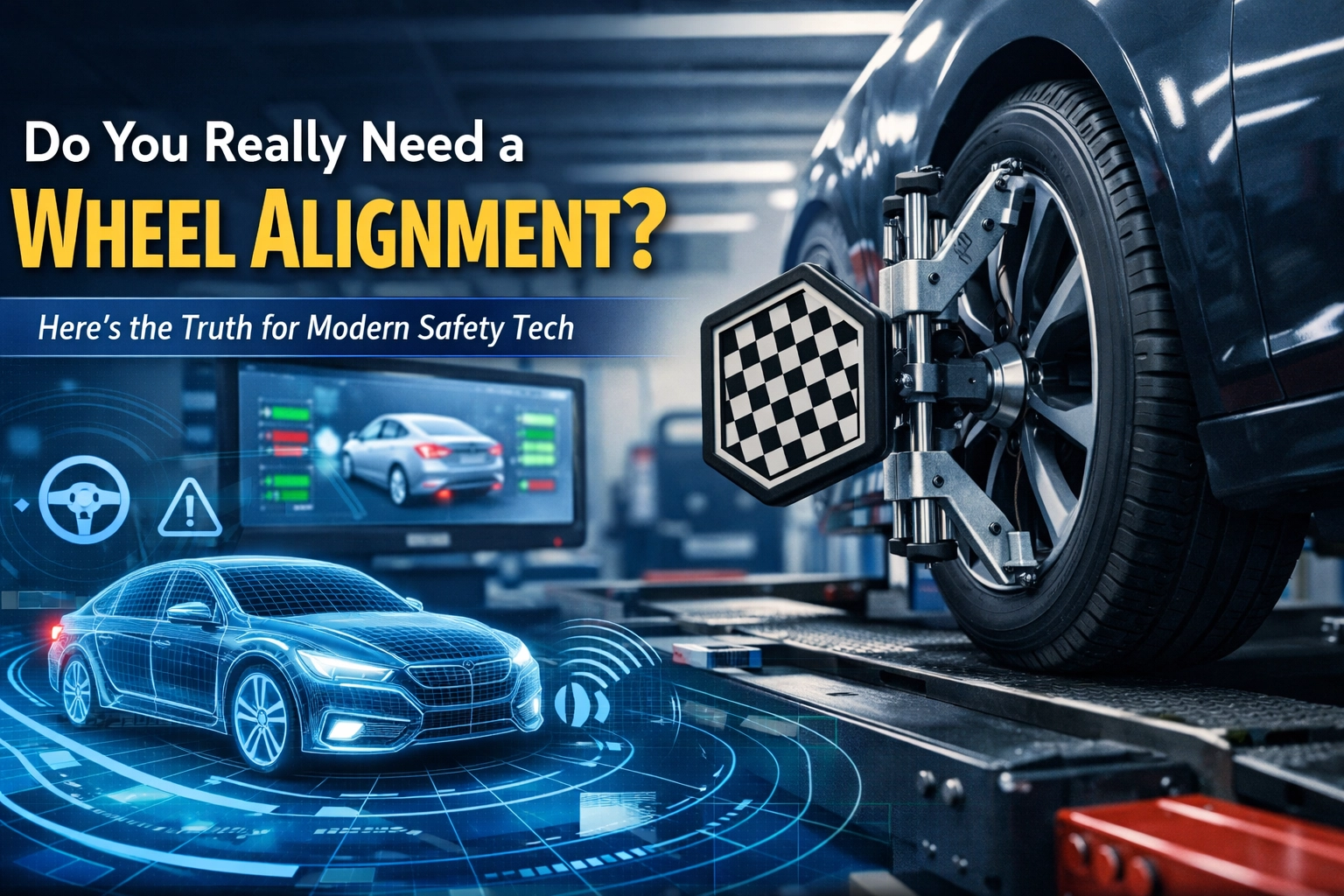
Do You Really Need a Wheel Alignment? Here’s the Truth for Modern Safety Tech
Imagine you’re cruising down Highway 68 on a beautiful Alabama afternoon. Your favorite song is on the radio, the AC is blowing cold, and for a second, everything feels perfect. But then, you notice it, a slight, persistent tug of the steering wheel to the left. You straighten it out, but a mile later, your hands are tired from constantly correcting the car’s path. Then, a warning light flashes on your dash: “Lane Keep Assist Unavailable.”
Is it a computer glitch? A broken sensor? Or is it something as “old school” as your wheel alignment?
At Mike’s Alignment & Tire Services Inc, we hear this question a lot: “Do I really need an alignment, or is that just something shops say to get a few extra bucks?”
In the past, a bad alignment just meant your tires wore out a little faster or your steering wheel was slightly crooked. But today, the “truth” has changed. For modern vehicles packed with safety technology, a wheel alignment isn’t just about saving your tires, it’s about making sure your car’s “brain” can see the road correctly.
The Invisible Link: Alignment and Modern Safety Tech
Most cars built in the last five to ten years are equipped with ADAS (Advanced Driver Assistance Systems). These include things like:
- Lane Departure Warning (LDW)
- Lane Keeping Assist (LKA)
- Adaptive Cruise Control (ACC)
- Automatic Emergency Braking (AEB)
These systems rely on cameras mounted behind your windshield and radar sensors tucked into your grille. They are calibrated to assume one very important thing: that your wheels are pointing exactly where the steering wheel says they are.
When your wheel alignment is off, your car’s “thrust line” (the direction the rear wheels are pushing the car) doesn’t match the direction the front wheels are steered. This creates a conflict. Your camera sees the lane lines and thinks you are drifting, but your steering angle sensor says you are driving straight.
The result? Your safety tech might shut down entirely, or worse, it might try to “correct” your steering when you don’t want it to. In a modern vehicle, a mechanical misalignment is a digital nightmare.

What Exactly Is a Wheel Alignment?
Think of your car’s suspension like a high-performance athlete’s joints. If a runner’s ankle is turned slightly inward, it affects their knee, their hip, and eventually, their whole stride.
When we perform a wheel alignment, we are adjusting three main angles:
- Camber: This is the inward or outward tilt of the tire when viewed from the front. If it’s tilted too far in (negative) or out (positive), you’ll see uneven wear on the edges of your tires.
- Toe: Imagine looking down at your own feet. If you point your toes toward each other, that’s “toe-in.” If you point them away, that’s “toe-out.” Your tires need to be perfectly parallel to roll without resistance.
- Caster: This angle identifies the forward or backward tilt of your steering axis. It’s what helps your steering wheel snap back to the center after you make a turn.
If even one of these is off by a fraction of a degree, your car is fighting itself every mile you drive.
Signs of Bad Alignment: Is Your Car Trying to Tell You Something?
You don’t need a degree in mechanical engineering to know when things are going south. Usually, your car will give you a few subtle (and some not-so-subtle) hints. Keep an eye out for these signs of bad alignment:
- The “Vagabond” Steering: Your car wants to wander. If you momentarily relax your grip on the wheel on a flat road and the car drifts toward the shoulder or the median, you’re out of alignment.
- The Crooked Logo: When you’re driving straight, is the emblem in the center of your steering wheel level? If it’s tilted to the 11 o’clock or 1 o’clock position while the car is moving in a straight line, your alignment is definitely off.
- Vibrating Steering Wheel: This can sometimes be a tire balance issue, but often it’s the result of tires fighting each other because the alignment is pulling them in opposite directions.
- Squealing Tires: If you hear a “chirp” or a squeal when turning at low speeds (like in a parking lot), it’s often because a tire is being dragged across the pavement rather than rolling over it.
The “Squeezed Balloon” Effect
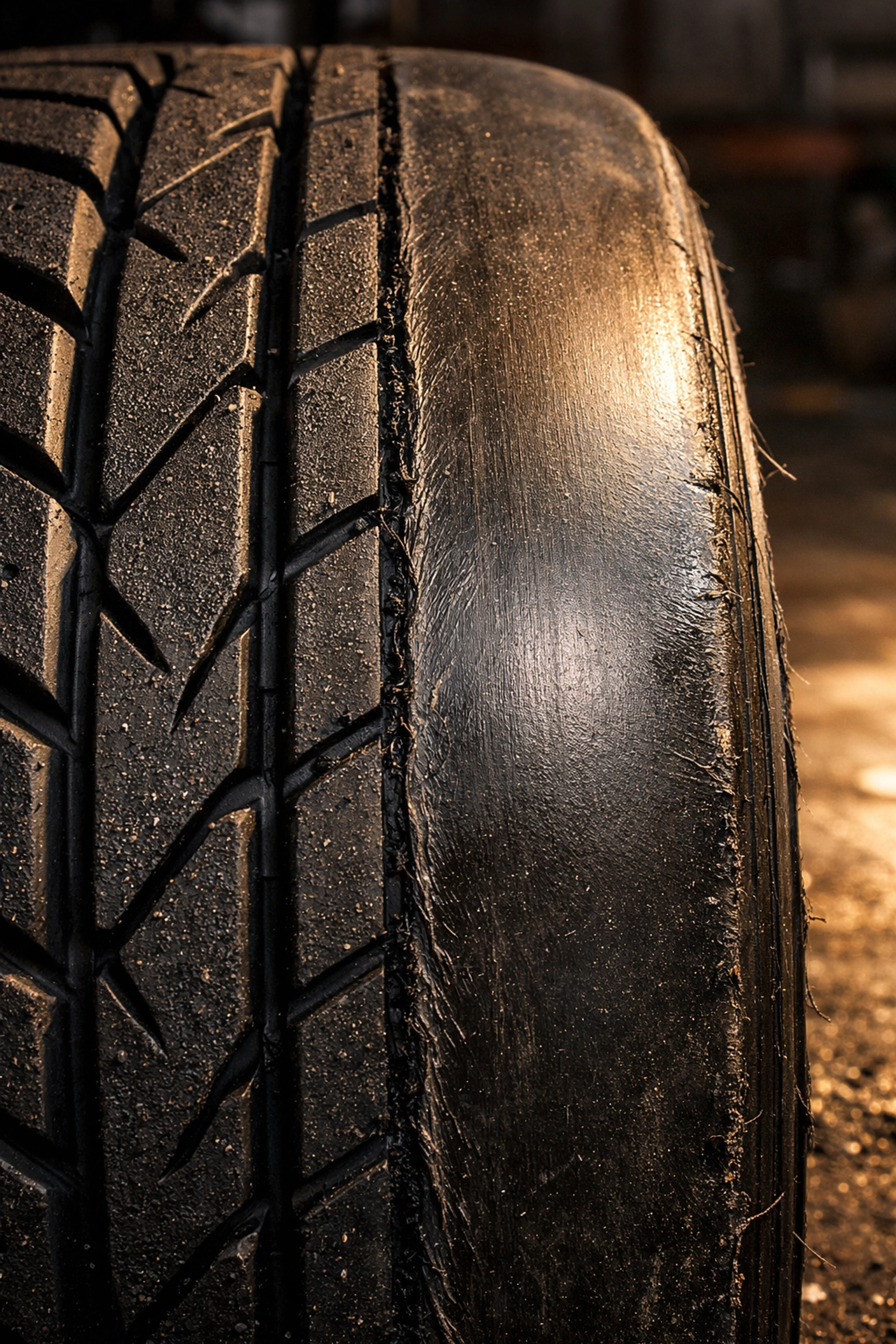
To visualize what’s happening to your tires, imagine holding a round balloon and squeezing one side of it against the floor while you try to slide it. The side being squeezed gets all the friction and heat, while the other side barely touches the ground. That’s what happens to your tire tread when your camber or toe is off. You’re concentrating the weight of a 4,000-pound vehicle on just one edge of the tire.
How Often Wheel Alignment Should Be Checked
This is the big question. If you look at your owner’s manual, it might give you a generic interval, but real-world driving in Alabama can be a bit more demanding.
As a general rule of thumb, we recommend a wheel alignment check every 6,000 to 10,000 miles, or about every other oil change. However, you should bring it in sooner if:
- You hit a “Crossville Special”: We all know those potholes that appear out of nowhere after a heavy rain. One hard hit against a curb or a deep pothole can knock your suspension out of whack instantly.
- You just bought new tires: Never put brand-new tires on a car without checking the alignment. It’s the fastest way to turn a $800 investment into a set of bald tires in six months.
- You’ve had suspension work: If you’ve replaced struts, shocks, or tie rods, an alignment is a mandatory final step.
- Seasonal Shifts: Drastic temperature changes can affect tire pressure and suspension components. In the South, where we go from freezing mornings to humid afternoons, these parts expand and contract, which can lead to slight shifts over time.
Why “Close Enough” Isn’t Good Enough Anymore
In the “old days,” a technician could do a “string alignment” or use basic gauges to get the car driving straight. But with modern safety tech, we have to be precise down to the millimeter.
Many modern vehicles require a SAS (Steering Angle Sensor) Reset during an alignment. This tells the car’s computer, “Okay, this position right here is exactly ‘zero’ or straight ahead.” If the technician doesn’t do this, your Automatic Emergency Braking might engage because it thinks you’re steering toward an obstacle when you’re actually just driving straight.
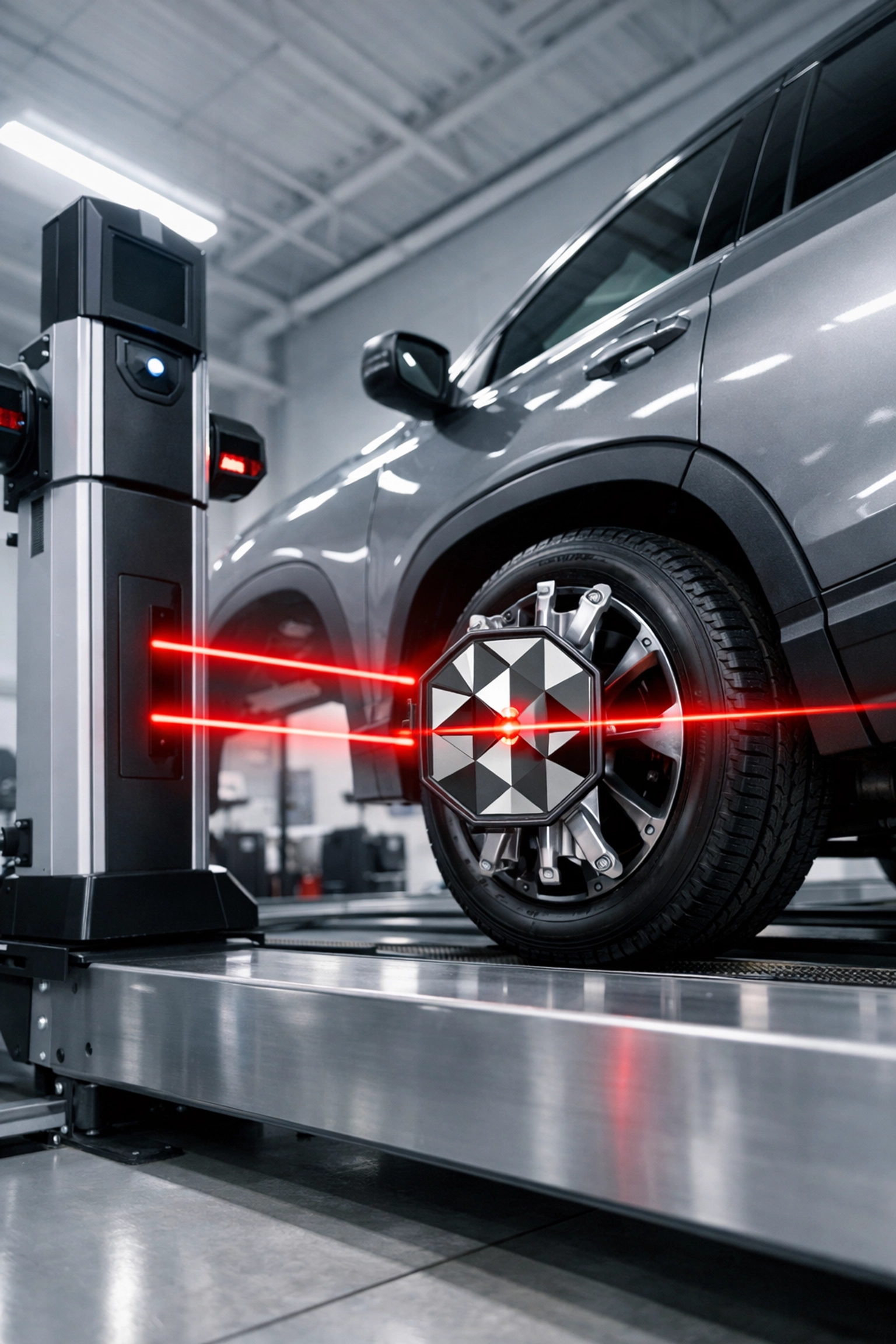
At Mike’s Alignment & Tire Services Inc, we use specialized equipment that interfaces with your car’s computer to ensure the mechanical alignment matches the digital calibration.
Action Steps: What Should You Do Now?
If you suspect your car is out of alignment, don’t wait until you see wires poking out of your tires. Here is a proactive plan:
- Perform a “Dry Park” Test: In a safe parking lot, turn your wheel all the way to the left and look at the inner tread of your front tires. Then do the same for the right. If the tread looks smooth on one side and “feathery” or sharp on the other, you need an alignment.
- Check Your Steering Wheel: On a straight, level road, note if your steering wheel is perfectly centered.
- Listen to Your Tech: During your next tire service, ask for a quick alignment check. Most shops can tell you in minutes if you’re within factory specs.
- Schedule a Professional Evaluation: If you’ve experienced any of the symptoms mentioned above, contact us to get a professional diagnostic.
The Bottom Line: Safety Over Savings
The “truth” about wheel alignment in 2026 is that it’s no longer an optional maintenance item: it’s a safety requirement. By keeping your wheels aligned, you aren’t just extending the life of your tires or getting better gas mileage (though you are doing both!). You are ensuring that the sophisticated safety systems you paid for are actually capable of protecting you and your family.
Don’t let a $100 alignment turn into a $1,000 tire replacement or a dangerous failure of your lane-assist technology. Treat your car right, and it will keep you straight and narrow on the road.
If you’re in the Crossville area and noticed your car pulling or your safety lights acting up, come see us at Mike’s Alignment & Tire Services Inc. We’ve been keeping our neighbors on the road safely for years, and we’d love to help you too.